Jobs in Belgium for Foreigners: 2026 Complete Guide
Jobs in Belgium for Foreigners — The Complete 2026 Guide
Everything you need to know about job availability, language requirements, work visas, and salary thresholds.
If you are a foreigner looking for a job in Belgium, you likely have many questions: Are there real job opportunities? Do you need to speak Dutch or French? How complicated is the visa process?
Information online can be contradictory—some sources claim jobs are plentiful, while others state options are strictly limited. This guide provides an honest, comprehensive breakdown of what it takes to land a job in Belgium as a foreign worker in 2026.
Belgium Jobs for Foreigners: Are There Vacancies?
Demand for international talent remains strong across Belgium. With an aging local population, forecasts indicate that the country requires significant foreign recruitment annually to sustain its labor market and economic needs.
Data from Eurostat highlights a high demand for labor, with a 3.5% job vacancy rate—significantly above the 2.0% EU average. Furthermore, according to ManpowerGroup Belgium, 72% of employers report difficulty filling open positions.
Which Sectors Need People?
While opportunities exist across many fields, foreign talent is especially sought after in key technical, corporate, and shortage roles:
- Information Technology & Data: High demand for software engineers, developers, data analysts, and IT specialists (accounting for ~25% of employer recruitment challenges).
- Engineering & Technical Services: Mechanics, industrial design, and technical engineers represent 27% of reported employer vacancies.
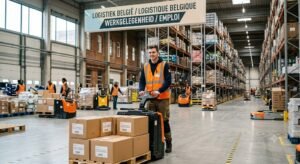
- Logistics & Supply Chain: Drivers, warehouse managers, and supply coordinators surrounding major hubs like the Port of Antwerp and Liège Airport.
- Healthcare & Life Sciences: Caregivers, medical professionals, and pharmaceutical specialists.
- Finance & EU Institutions: Economists, compliance experts, and policy specialists, primarily centered in Brussels.
Do You Need Dutch or French?
Whether you need to know the local language depends largely on your sector, target region, and employer structure:
- English-Only Positions: Common in multinational corporations, tech startups, and international/EU institutions based in Brussels.
- Local Language Impact: While finding work knowing only English is possible (especially with degrees in STEM, business, or economics), holding B1/B2 proficiency in Dutch or French significantly increases your options and mobility.
- Regional Differences: Flanders primarily speaks Dutch, Wallonia speaks French, and Brussels is bilingual (French/Dutch) with widespread English usage in corporate settings.
Visa Requirements & Permit Types
Non-EU/EEA nationals require authorization to live and work in Belgium. The application must be sponsored and submitted by your local Belgian employer through the regional employment office:
1. Single Permit
The standard combined work and residence permit. Processed via regional employment offices: VDAB (Flanders), FOREM (Wallonia), or Actiris (Brussels) through the central “Working in Belgium” portal.
2. EU Blue Card
Designed for highly qualified professionals possessing a recognized higher education degree (minimum 3 years) and a contract meeting higher salary criteria. Offers greater EU-wide mobility and family rights.
Minimum Salary Thresholds (2026 Regional Overview)
| Permit Category | Minimum Annual Gross Threshold |
|---|---|
| Highly Skilled Single Permit | €44,441 – €51,613 (varies by region) |
| EU Blue Card Holders | €63,586 – €66,738 (varies by region) |
Labor Market Test Exemptions: You can skip the standard labor market test (which checks if a local applicant is available) if applying as a highly skilled worker, occupying a recognized shortage role, transferring intra-company, or applying via an EU Blue Card.
Processing Times & Standard Fees
Timeline: The permit application undergoes regional employment review followed by Federal Immigration Office review. Total processing typically takes 3 to 4 months. Under Belgian regulations, if a decision is not finalized within 4 months, the application is legally granted.
Associated Fees:
- Type D Long-Stay Visa Fee: €250
- Federal Administrative Fee: ~€152 to €377 (depending on category)
- Flemish Regional Processing Fee: €180 (for Flanders applications)
- Municipal Residence Card (eID): ~€20–€30 (varies by commune)
Summary & Action Plan for Job Seekers
To maximize your chances of securing employment and a work permit in Belgium:
- Secure an Employer First: You cannot apply for a work permit independently; the employer must initiate the process. Target recruitment platforms and agencies experienced with sponsoring visas (e.g., Hays, Randstad, Accent Jobs).
- Target High-Demand Roles: Focus on roles in STEM, IT, logistics, or designated regional shortage lists to simplify the labor market test and accelerate approval.
- Prepare Documentation Early: Have your higher education degrees authenticated, and prepare police clearances and medical certificates in advance.
- Invest in Language Skills: Even basic Dutch or French skills improve workplace integration, municipal registrations, and long-term residency options.